
Aug
Blogs, Wall & Pipe Protection
The Essential Commercial Property Safety Checklist: High-Impact Bollards, Corner Guards & Pipe Protectors
Every year, Sydney commercial property owners write off thousands of dollars in avoidable damage. For instance, a reversing forklift might crumple a warehouse corner, or a delivery van could clip an exposed stormwater pipe. Similarly, a simple shopping trolley can easily gouge a freshly rendered wall. Consequently, while none of these minor incidents make the evening headlines, they quietly eat into maintenance budgets, inflate insurance premiums, and degrade tenant goodwill, one dent at a time.
Fortunately, almost all of this operational damage can be completely avoided. With a well planned program of bollards, corner guards and pipe protectors you can turn exposed impact areas into hardened, low maintenance assets. The return on investment from proactive site defense far outweighs the cost of a single major repair, never mind an expensive liability claim.
At Uneek Metalcraft, we proudly manufacture heavy-duty steel protection hardware right here in our Sydney workshop. Because our products are specifically built for the harsh realities of Australian commercial sites, they effortlessly withstand high-traffic environments, heavy machinery, and unforgiving weather conditions. Therefore, this checklist walks through the exact hardware property managers, facility directors, builders, and strata committees should specify for their sites, along with the concrete reasons why.
Surface Mount Bollards:
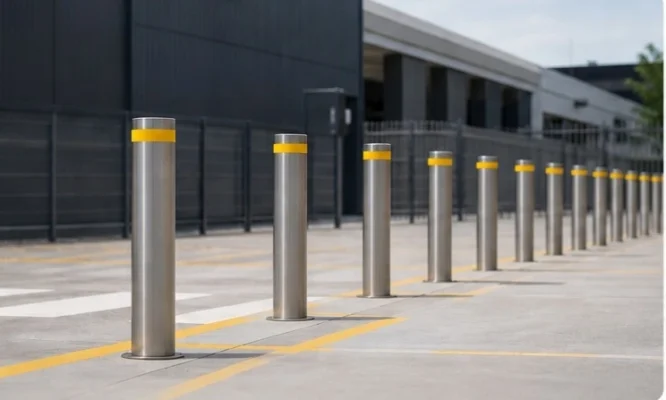
Bollards are the vital first line of defense wherever vehicles and pedestrian infrastructure intersect. However, not all bollards are the same. So the choice of the right diameter depends a lot on the assets you are protecting and the size of the vehicles passing nearby. In addition, we carry a broad selection of surface mount bollards from lightweight visual delineators to high impact protection zones.
90mm Bollards:
First, the 90mm bollard is most appropriate for low speed pedestrian areas such as the edges of storefronts, outdoor dining precincts and edges to walkways. The main goal in these spaces is to provide visual guidance, not to absorb large vehicular impacts. Thus, it offers a surprisingly inexpensive way of delineating space while at the same time deterring casual driver intrusion into retail parking lots and loading lanes.
114mm Bollards:
Moving up in size, the 114mm model represents the standard workhorse for most Sydney retail hubs and corporate office precincts. Because it offers a meaningful step up in overall structural strength, this size is ideal for guarding glass facades, entryways, cash machines, and gas meters against slow-moving passenger vehicles and light delivery vans.
140mm Bollards:
In contrast to office parks, environments that involve constant forklift activity, pallet jacks, and heavy transport trucks demand a sturdier barrier. Therefore, 140mm bollards serve as the practical minimum specification around loading dock columns, warehouse racking end-frames, and main roller shutter doors. As a result, they comfortably absorb the repeated low-speed knocks typical of a busy workday.
165mm Bollards:
For industrial estates, logistics hubs, and busy service stations handling continuous heavy transport, 165mm bollards provide substantially greater impact resistance. Accordingly, engineers frequently specify this size around fuel storage tanks, electrical substations, and main structural pillars where a collision would prove extraordinarily dangerous and costly.
220mm Bollards:
Ultimately, the 220mm bollard stands as our highest-specification defense option. It is specifically engineered for high-consequence areas, such as building corners exposed to tight truck turning radii, critical utility infrastructure, and high-speed industrial entry points. Therefore, if your site risk assessment flags a location as a worst-case collision scenario, this is unequivocally the size to install.
(Practical Tip: Under AS/NZS 2890 parking facility standards, required clearances and vehicle path geometry should guide your bollard placement rather than diameter alone. Consequently, poorly positioned or undersized bollards may still fail to protect your physical assets despite having a high strength rating)
Stainless Steel Corner Guards:
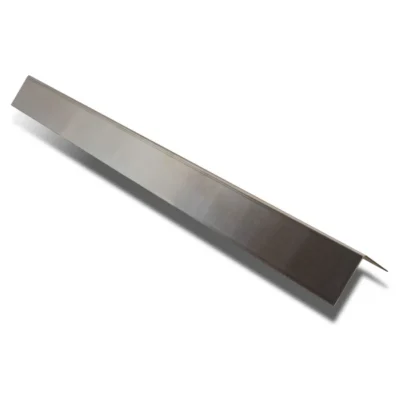
While exterior bollards manage incoming vehicular threats, interior structural corners face a completely different form of daily wear. Specifically, they suffer constant impacts from trolleys, electric pallet jacks, industrial cleaning rigs, and heavy foot traffic. To combat this issue, our 100mm stainless steel corner guards are engineered specifically for demanding indoor environments.
Wall Corner Protection:
Internal wall corners across warehouses, stockrooms and logistics corridors are constant collision hazard points. Luckily, a 100mm stainless steel guard effectively absorbs and deflects routine impacts. The immediate consequence is that it protects plasterboard and rendered surfaces from the unsightly chips, deep cracks and gouges that otherwise build up over months of daily trolley use.
Concrete Corner Protection:
In the same way, concrete corners that have been exposed these are found quite often in multilevel basement parking lots, staircases, and warehouse pillars are susceptible to edge spalling whenever they are hit. Consequently, installing a corner guard is not merely an aesthetic addition; on the contrary, it actually protects the structure over time by preventing costly concrete repairs.
Interior High-Traffic Zones:
Moreover, any commercial facility where staff, trolleys, or equipment move at a rapid pace such as commercial kitchens, hospital corridors, and retail back-of-house areas greatly benefits from dedicated corner shielding. Furthermore, stainless steel is the preferred material choice here because it easily withstands aggressive washdown procedures, resists rust, and meets the strict hygiene demands of food service and healthcare settings.
Additionally, because corner protection serves as a compliance and safety measure alongside its aesthetic value, it is routinely integrated into comprehensive risk assessments. For instance, it functions as a practical control method for reducing workplace collisions, as outlined in the Safe Work Australia traffic management guidance.
Galvanised Heavy-Duty Downpipe Protectors:
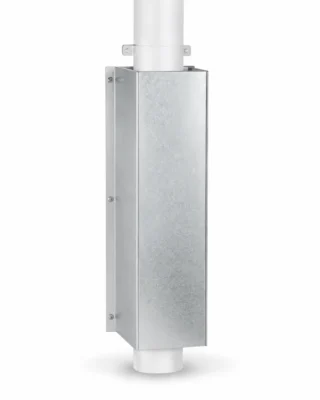
Exterior stormwater downpipes represent one of the most frequently overlooked structural vulnerabilities on commercial properties. For example, a single misjudged reversing maneuver by a delivery truck or a dropped pallet can instantly crush an exposed downpipe. Consequently, this leads to sudden water damage, localized flooding, and unexpected emergency repair invoices. Fortunately, our 150mm U-channel downpipe protectors are purpose-built to eliminate this exact threat.
Built for the Outdoors:
Since these U-channel shields are made out of heavy-duty galvanized steel, they have been especially constructed to endure tough outdoor weather conditions in Sydney. For example, they can withstand harsh UV rays, rains, as well as salty air along the coast without any premature rusting that is common in ordinary metals and plastic shields.
Where They’re Used:
Hence, the downpipe protector should be used wherever there is a storm water pipe adjacent to where traffic or the trolleys run. Important locations for the application of the protector include around the loading docks, basement car parks, service lanes behind strip malls, and on the outer walls of warehouses. In the end, installing a protector is very cheap compared to the huge costs of excavation.
A Simple ROI Case:
In short, the cost of repairing one faulty downpipe could easily reach into the thousands, especially when you take into account emergency plumber’s charges and the cost of cleaning up water. On the other hand, installing a galvanized U-shaped channel protector means eliminating this financial risk forever.
Frequently Asked Questions:
1. How are bollards and corner guards fixed to concrete or masonry surfaces?
Surface mount bollards use mechanical expansion anchors or chemical bolts set into concrete slabs. Corner guards mount with specialized screws or high-strength adhesives. See our step-by-step guide on how to install surface mount bollards on concrete.
2. What’s the difference between galvanised and Safety Yellow powder-coat finishes?
Galvanised finishes offer weather and salt resistance outdoors; Safety Yellow provides high visibility indoors. Combining both gives maximum durability. Learn more in our guide on choosing metal finishes for Sydney’s coastal environments.
3. Do bollards need to comply with specific Australian standards?
Yes, installations usually follow AS/NZS 2890 parking standards for clearance and Safe Work Australia guidelines. Read our post on Australian bollard rules and AS/NZS standards.
4. How do I choose the right bollard diameter for my site?
Use 90mm–114mm for walkways, 140mm for loading zones, and 165mm–220mm for heavy truck areas. Read our post on preventing forklift damage to warehouse racking.
5. Can Uneek Metalcraft handle bulk or trade orders for multi-site portfolios?
Yes, we supply bulk and custom orders for Sydney facility managers, builders, and strata teams. Reach out via our contact page for trade quotes.
6. Do you offer custom fabrication if standard sizes don’t fit our site?
Yes. We custom-fabricate bollards, corner guards, and pipe protectors to your specs. Check our About Us page.
Secure your commercial property against costly impact damage today with our Australian-made steel bollards, corner guards, and pipe protectors, or contact our Sydney team for custom trade quotes.
